

Knipex vs Klein Lineman’s Pliers | 09 12 240 vs D213-9NE-CR Long-Term Review
Read in English ↓ HERE
전기 작업을 하면서 가장 자주 사용하는 공구 중 하나가 펜치입니다.
저 역시 여러 펜치를 사용해왔고, 현재는 Knipex 09 12 240과 Klein Tools D213-9NE-CR을 모두 사용하고 있습니다.
클라인툴스는 몇 자루를 사용할 정도로 오랫동안 써왔고, 크니펙스 역시 새 제품을 잠깐 사용해본 것이 아니라 실제 현장에서 충분히 사용했습니다.
이번 글에서는 새 제품의 세부 스펙보다는 두 제품을 실제 전기공사 현장에서 사용하면서 느낀 차이를 중심으로 이야기해보려고 합니다.
결론부터 말하면 저는 둘 중 하나가 압도적으로 좋다고 생각하지 않습니다. 둘 다 펜치가 해야 할 역할은 충분히 잘합니다.
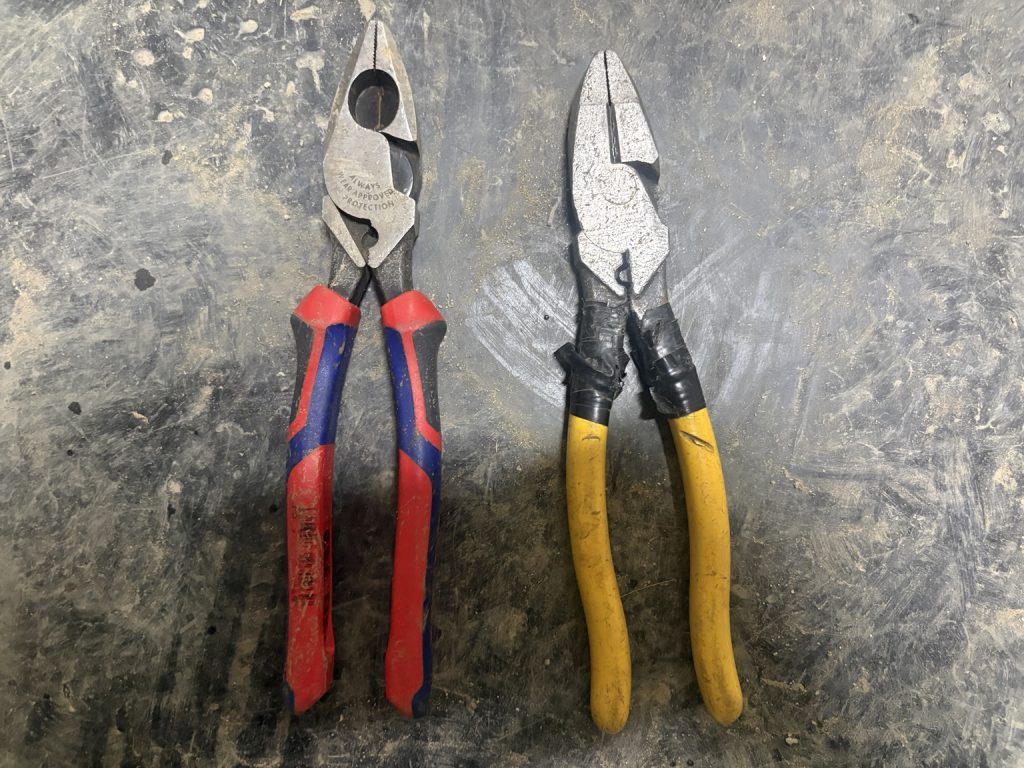
오래 사용해본 Klein Tools D213-9NE-CR
클라인툴스 펜치는 저에게 새로운 공구라기보다 현장에서 부담 없이 꺼내 쓰는 익숙한 공구에 가깝습니다.
한 자루만 사용한 것도 아니고 몇 자루를 계속 사용해왔는데, 잡고 비틀고 전선을 조인하거나 자르는 등 펜치가 해야 할 기본적인 역할을 충분히 해냅니다. 현장에서 거칠게 사용하기에도 부담이 적어 저에게는 말 그대로 자주 손이 가는 공구입니다.
사진 속 제품을 보면 손잡이 위쪽에 테이프가 감겨 있습니다. 제가 사용했던 클라인 펜치들은 오래 사용하다 보면 이 부분의 고무가 닳는 경우가 있었고, 헤진 부분이 손가락에 닿으면서 불편해져 현재 사용하는 제품은 테이프로 감아두었습니다.
물론 모든 사용자에게 똑같이 나타나는 현상이라고 할 수는 없고, 제가 여러 자루를 사용하면서 반복적으로 경험한 부분입니다.
국내 전기 작업자들 중에는 클라인툴스 펜치에 CN-CV 케이블 등을 활용해 손잡이를 두껍게 만드는, 현장에서 흔히 말하는 ‘펜치깡’을 해서 사용하는 경우도 많습니다.
저는 개인적으로 펜치가 무거워지는 것을 좋아하지 않고, 하루 종일 벨트에 넣고 다니는 공구인 만큼 가능하면 기본 상태 그대로 사용하는 편입니다.
사진을 보면 헤드도 상당히 울퉁불퉁합니다. 이것 역시 단순히 오래 사용해서 생긴 흔적만은 아닙니다. 저는 작업 중 펜치 헤드 부분을 가볍게 타격 용도로 사용하는 경우가 있어서 이런 흔적이 많이 남았습니다.
펜치는 본래 타격공구가 아니기 때문에 권장하는 사용법이라기보다는, 사진 속 펜치가 실제 현장에서 어떻게 사용되어 왔는지를 보여주는 흔적 정도로 봐주시면 좋겠습니다.

Knipex 09 12 240과 실제 사용감 비교
크니펙스 역시 새 제품을 잠깐 사용해본 것이 아니라 실제 현장에서 사용해왔고, 현재는 사진처럼 상당한 사용 흔적이 남아 있습니다.
두 제품을 번갈아 사용할 때 제가 가장 크게 느낀 차이 중 하나는 의외로 무게감이었습니다.
제품의 스펙을 모르는 상태에서 잡아보면 저는 크니펙스가 확실히 가볍게 느껴집니다. 반대로 클라인은 상대적으로 헤드 쪽이 묵직하게 느껴졌고, 단순히 몇 g 차이라고 생각하기 어려울 정도로 체감 차이가 컸습니다.
그런데 이번 글을 작성하면서 제조사 제원을 확인해보니 의외였습니다. Knipex 09 12 240은 455g, Klein Tools D213-9NE-CR은 454g으로 표기되어 있어 실제 총중량은 사실상 동일했습니다.
정확한 무게중심까지 측정한 것은 아니기 때문에 왜 이렇게 다르게 느껴지는지는 알 수 없습니다. 다만 실제 현장에서 두 제품을 번갈아 사용했을 때 느껴지는 무게감에는 저에게 분명한 차이가 있었습니다.
죠와 절단 성능에서는 개인적으로 어느 한쪽이 압도적으로 낫다고 느끼지는 않았습니다. 특히 펜치를 오래 사용하면서 전선을 조인하다 보면 죠의 요철도 점차 마모되기 때문에, 저는 새 제품 상태의 죠 형상만으로 두 제품의 우열을 크게 나누지는 않는 편입니다.

결국은 가성비보다 가심비
둘 중 어떤 제품이 더 좋냐고 묻는다면 저는 사실 어느 것을 사용해도 괜찮다고 생각합니다.
클라인툴스 D213-9NE-CR은 부담 없이 현장에서 거칠게 사용하면서도 맡은 역할을 충분히 해내는, 저에게는 현장 최전선에서 막 굴리는 공구에 가깝습니다.
반면 Knipex 09 12 240은 실제 사용감에서 차이가 있고, 크니펙스라는 브랜드에서 오는 만족감도 분명히 있습니다. 국내 현장에서 클라인만큼 흔하게 보이는 제품은 아니다 보니 아무 곳에나 내려놓고 다니기에는 개인적으로 조금 더 신경 쓰이기도 합니다.
결국 저에게 두 제품의 선택은 단순히 어느 쪽의 성능이 더 좋은가보다는 ‘가심비’의 영역에 가깝습니다.
크니펙스가 마음에 든다면 크니펙스를 선택해도 좋고, 부담 없이 거칠게 사용하면서 제 역할을 확실하게 해내는 공구를 원한다면 클라인도 충분히 좋은 선택이라고 생각합니다.
둘 다 좋은 펜치이고, 결국 자신이 더 마음에 들고 손이 가는 제품을 사용하는 것이 가장 좋은 선택이라고 생각합니다.
English Version
Knipex vs Klein Lineman’s Pliers | 09 12 240 vs D213-9NE-CR Long-Term Review
Lineman’s pliers are one of the tools I use most often in electrical work.
This Knipex vs Klein Pliers comparison is based on my actual experience using both tools on electrical construction sites.
Over the years, I have used several different pairs of pliers, and I currently use both the Knipex 09 12 240 and the Klein Tools D213-9NE-CR.
I have gone through several pairs of Klein pliers over the years, and the Knipex has also seen plenty of actual jobsite use. So rather than comparing two brand-new tools based mainly on specifications, I want to focus on the differences I have noticed while actually using them for electrical work.
To give away the conclusion first, I don’t think either one is overwhelmingly better than the other.
Both do the job of a good pair of lineman’s pliers very well.
Long-Term Experience with the Klein Tools D213-9NE-CR
The Klein is less of a new or special tool to me and more of a familiar pair of pliers that I can grab and use without thinking too much about it on the jobsite.
I have used several pairs over the years. They handle the basic jobs I expect from lineman’s pliers—gripping, twisting, splicing, and cutting wire—and I have never felt the need to treat them delicately.
You can see tape wrapped around the upper part of the handles in the photo. On several pairs of Klein pliers I have used, the handle coating in this area eventually wore down. Once the worn area started rubbing against my fingers and became uncomfortable, I wrapped it with tape.
That does not necessarily mean every user will experience the same wear. It is simply something I have repeatedly noticed with the pairs I have personally used.
Among electricians in Korea, it is also fairly common to see Klein pliers with sections of CN-CV cable fitted over the handles to make them thicker. On jobsites, this is sometimes informally referred to as “plier-kkang” (펜치깡).
I personally prefer not to do this because it adds weight to a tool that I carry on my belt throughout the day. I prefer using the handles in their original form.
The head of my Klein also looks quite rough and uneven. That is not simply the result of normal wear. I occasionally use the head for light tapping during work, which has left many of those marks over time.
Lineman’s pliers are not designed as striking tools, so I am not recommending this as a proper use. It is simply an explanation of how this particular pair has actually been used on the jobsite.
Knipex 09 12 240: How It Feels in Actual Use
The Knipex is not a tool I only tried while it was new either. It has also been used extensively on the jobsite and now shows plenty of wear.
One of the biggest differences I noticed when switching between the two was surprisingly how heavy they feel in the hand.
Without knowing the specifications, the Knipex feels noticeably lighter to me. The Klein, on the other hand, feels heavier toward the head, and the difference in perceived weight is much greater than I would have expected from just a few grams.
When I checked the manufacturers’ specifications while writing this review, however, I found something surprising.
The Knipex 09 12 240 is listed at 455 g, while the Klein Tools D213-9NE-CR is listed at 454 g. In terms of total weight, they are essentially identical.
I have not measured the actual balance point of either tool, so I cannot say exactly why they feel so different. But when I switch between them during actual work, the difference in perceived weight is very noticeable to me.
As for the jaws and cutting performance, I personally do not find either one overwhelmingly superior.
With long-term use—especially repeated gripping and twisting of conductors—the teeth on the jaws gradually wear down. Because of that, I do not put too much weight on differences in jaw shape when comparing two brand-new pairs of pliers.
In the End, It Comes Down to Personal Satisfaction
If someone asked me which of these two is better, my answer might be a little disappointing:
I think either one is perfectly fine.
The Klein Tools D213-9NE-CR is the kind of tool I can use hard on the jobsite without worrying too much about it, while still trusting it to perform the basic jobs I need from a pair of lineman’s pliers.
For me, it is very much a front-line work tool.
The Knipex 09 12 240, on the other hand, has a different feel in use, and there is also a certain satisfaction that comes with using a Knipex tool. It is less commonly seen on the jobsites where I work in Korea, so I also tend to pay a little more attention to where I leave it.
Ultimately, I think choosing between these two is less about which one is objectively better and more about which one gives you greater personal satisfaction as a tool you use every day.
If you like the Knipex brand and prefer how it feels in your hand, there is nothing wrong with choosing the Knipex. If you want a tool you can use hard every day while still expecting it to do its job reliably, the Klein is also a very solid choice.
Both are good lineman’s pliers. In the end, I think the better choice is simply the one you enjoy using and naturally reach for more often.